How to Configure IBAN, Credit Card, and Phone Number Redaction in Zendesk
-
GDPR Compliance

GDPR Compliance for Zendesk now offers more flexible and accurate sensitive data redaction. You can independently control IBAN and credit card anonymization in ticket comments and subjects. We've also improved phone number detection to reduce false positives and prevent unrelated numeric sequences from being anonymized.
These improvements are part of the app's Advanced Anonymization functionality.
Configure IBAN, credit card and phone number redaction
You can now manage IBAN (for Premium and Enterprise users only), credit card and phone number redaction separately for ticket comments and ticket subjects.
Do the following actions to configure these preferences:
1. Open GDPR Compliance in Zendesk.
2. Go to Settings → Process Preferences → Anonymization → Select the preset or create the new one.
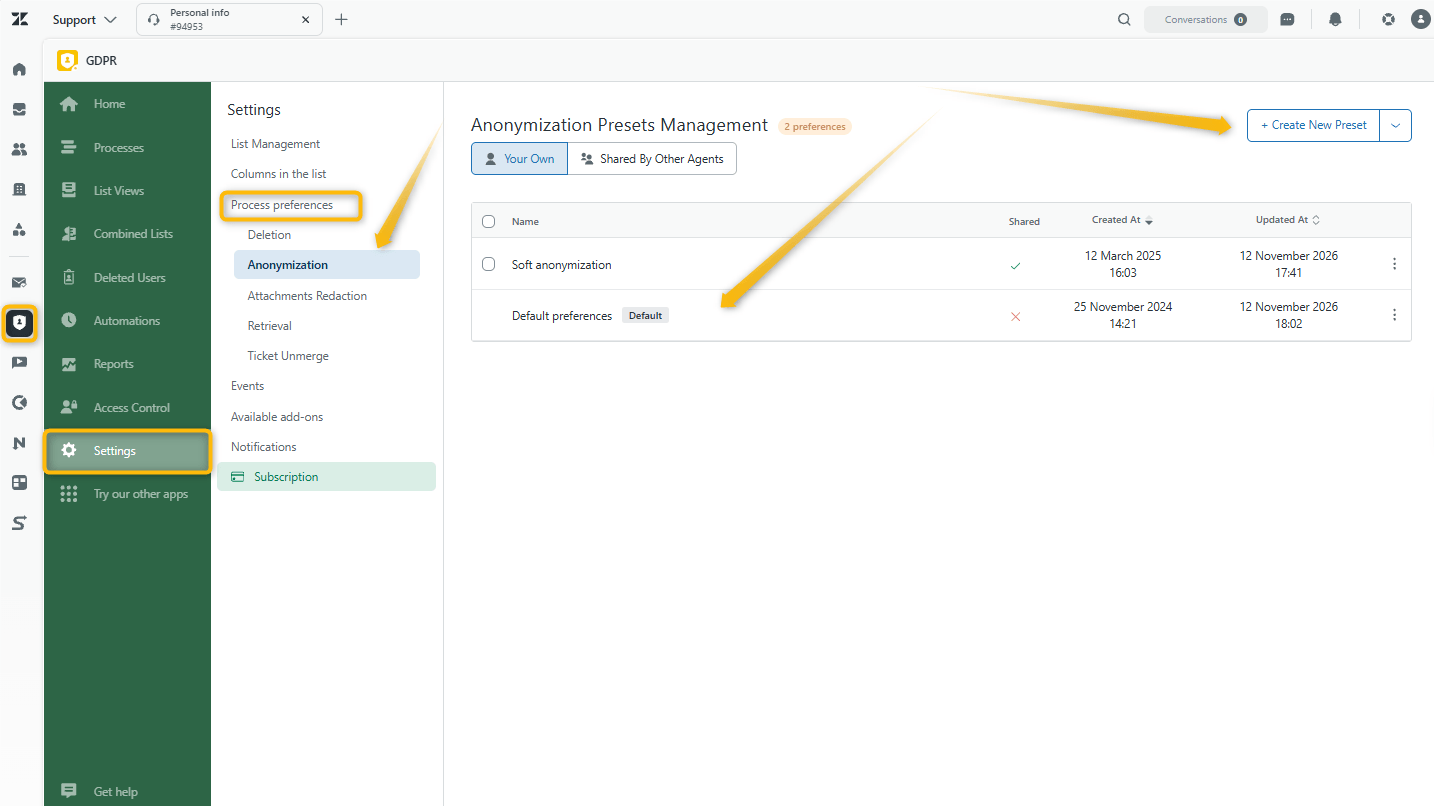
3. Find redaction preferences under the Ticket anonymiation preferences sections
- Ticket Comments: controls redaction in ticket comments
- Ticket Subject: controls redaction in ticket subjects.
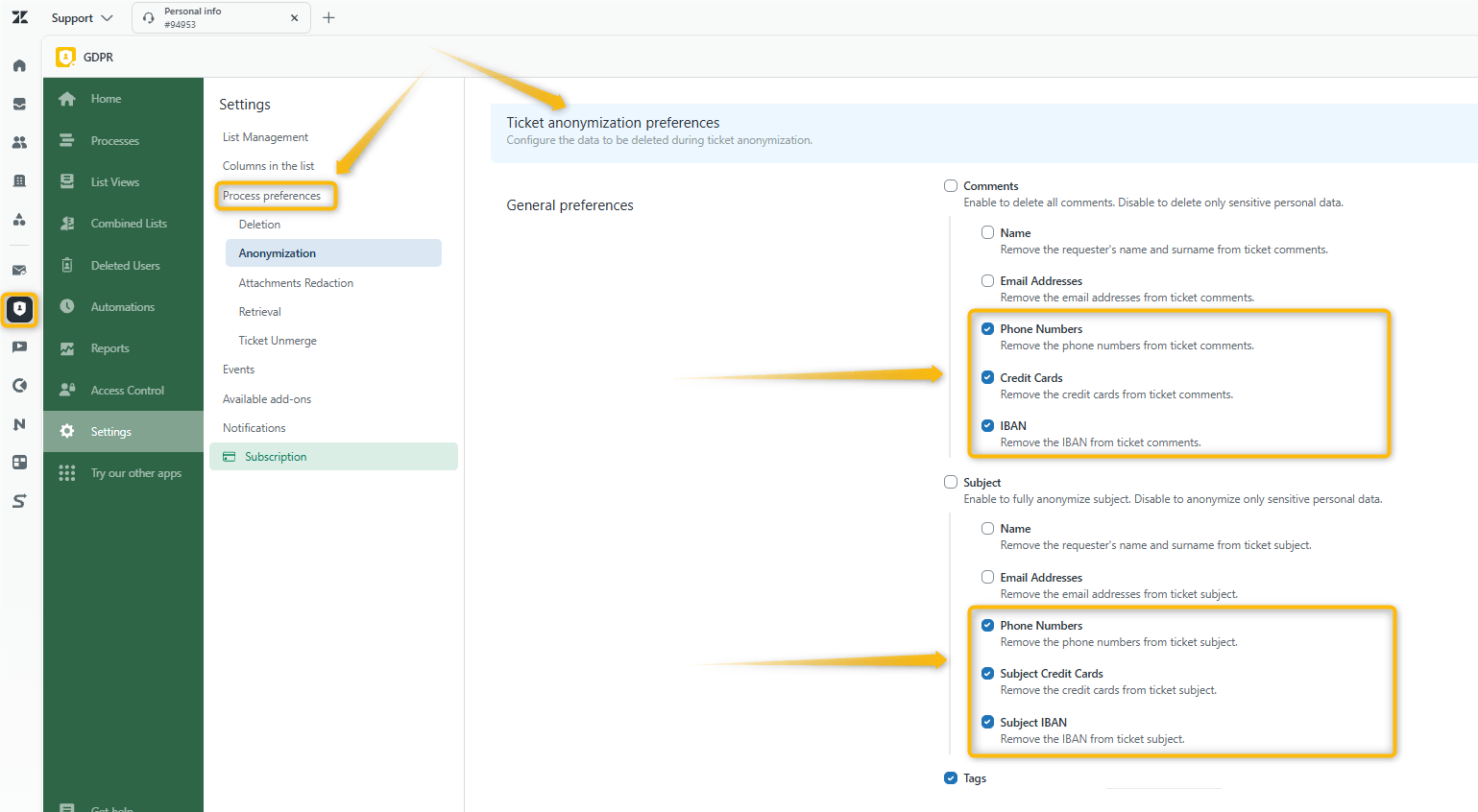
4. Enable or disable the preferences as needed.
How IBAN detection works
The app checks more than the IBAN format. It also validates the number using the MOD-97 algorithm. This helps distinguish valid IBANs from unrelated combinations of letters and digits.
How credit card detection works
The app uses the MOD-10 algorithm (Luhn algorithm) to validate credit card numbers before redacting them. Numbers that fail this validation are not treated as valid credit card numbers by the credit card redaction mechanism.
Improved phone number detection
We've updated phone number recognition to reduce false positives.
Previously, the app could identify a sequence of digits inside a longer number or another text fragment as a separate phone number. For example, digit groups within an IBAN or credit card number could sometimes be mistaken for phone numbers and redacted.
Now, a phone number must be separated from the surrounding text by at least a space to be recognized. This helps prevent parts of other numeric values from being incorrectly anonymized.
Examples
Example 1: Digits separated by spaces
Input:
5500 1234 5678 9999
If this number fails MOD-10 validation, credit card redaction will not process it. However, phone number detection may recognize the first 12 digits as separate phone number groups because they are separated by spaces.
Possible result:
▇▇▇▇ 9999
Example 2: Continuous digit sequence
Input:
5500123456789999
The continuous sequence will not be recognized as a phone number because it does not contain the required separation.
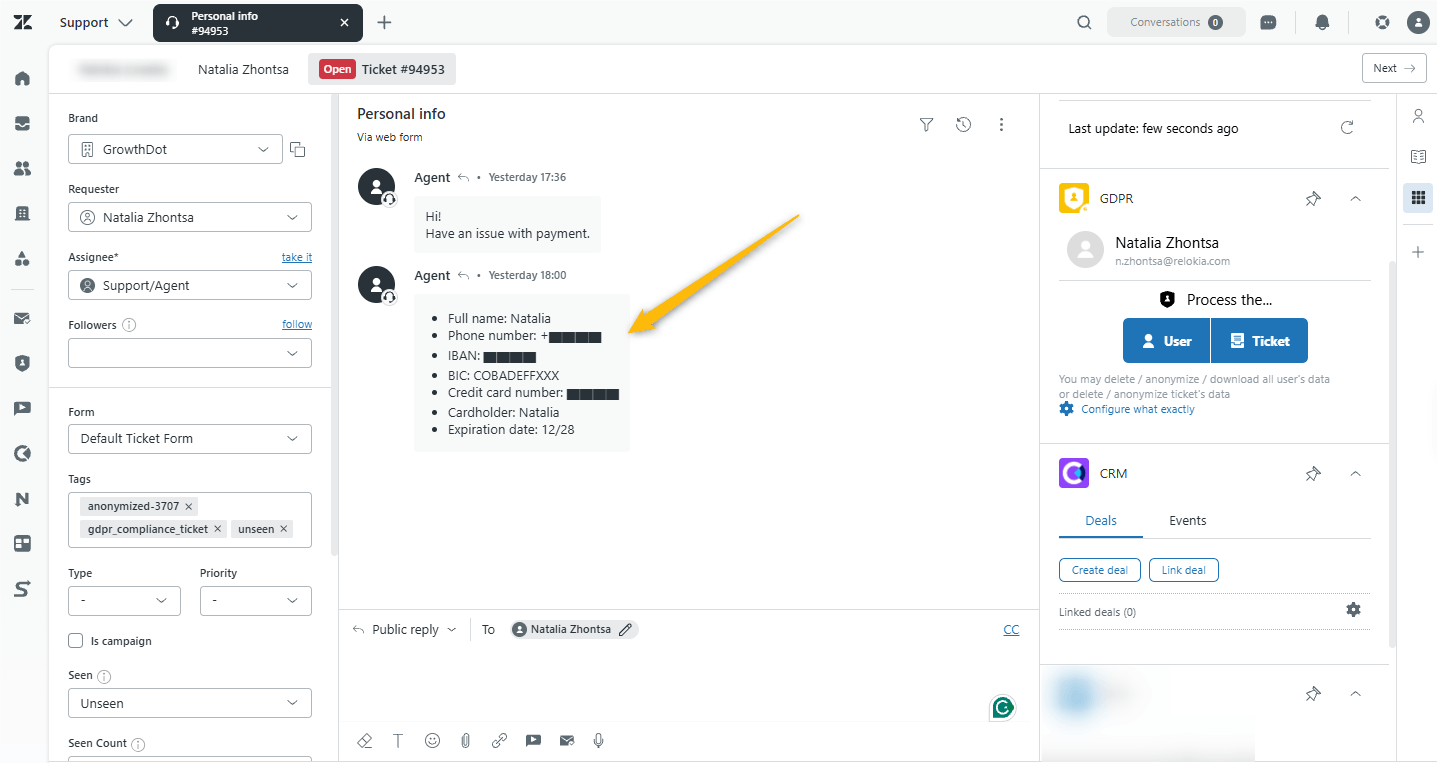
Here how anonymization looks in the ticket:
Need help?
If a valid IBAN or credit card number isn't being anonymized, first check the corresponding preference and the number's validation. If you notice unexpected redaction, review the number's formatting. If the behavior still doesn't match expectations, contact our support team and provide an example for investigation.
FAQ
Zendesk GDPR Compliance: Automatic Data Redaction


